

race strategy pdf
Race Strategy in Motorsport: A Comprehensive Guide
PDF resources detail utilizing Artificial Neural Networks for informed pit stop decisions and tire compound selection, crucial for optimizing race strategy in Formula 1.
Race strategy is the cornerstone of success in motorsport, extending far beyond simply driving fast. It’s a dynamic, multifaceted discipline involving predictive analysis and real-time adaptation. PDF documents, like those found on Semantic Scholar detailing Virtual Strategy Engineers (VSE), highlight the increasing reliance on data-driven decision-making.
These VSE systems, often employing Artificial Neural Networks, aim to optimize pit stop timing and tire choices. Understanding the interplay between tire compounds, tire degradation, and fuel load is paramount. Successful strategies aren’t static; they require constant evaluation and adjustment based on evolving race conditions, including safety car deployments and competitor actions. The core objective is to maximize track position and ultimately, achieve victory.
The Core Components of a Race Strategy
A robust race strategy hinges on several interconnected components, as detailed in various PDF analyses of motorsport tactics. Central to this is a deep understanding of tire compounds and their associated performance characteristics. Predicting tire degradation rates is crucial, influencing pit stop windows and overall race pace.
Furthermore, fuel load management plays a significant role, balancing performance with the need to reach the finish. Virtual Strategy Engineers (VSE), utilizing Artificial Neural Networks, integrate these factors to propose optimal strategies. These systems, discussed in academic PDFs, continuously analyze data to refine predictions and respond to dynamic race conditions, ensuring a competitive edge.
Understanding Tire Compounds
PDF resources emphasize that mastering tire compounds is foundational to effective race strategy. Different compounds – hard, medium, and soft – offer varying levels of grip and durability. Softer compounds provide superior grip but degrade faster, necessitating more frequent pit stops.
Conversely, harder compounds offer greater longevity but reduced grip. A Virtual Strategy Engineer (VSE), often detailed in technical PDFs, leverages data to predict compound performance under specific race conditions. Understanding these trade-offs, and how they interact with track temperature and surface abrasiveness, is vital for maximizing performance and achieving optimal race results.
Analyzing Tire Degradation
PDF documentation on race strategy highlights that accurately analyzing tire degradation is paramount. Factors like driving style, fuel load, and track conditions significantly impact how quickly tires lose performance. A Virtual Strategy Engineer (VSE), as described in academic PDFs, utilizes Artificial Neural Networks to model this degradation.
Predicting the optimal pit window – the point at which tire performance drops enough to warrant a change – requires careful consideration of these variables. Ignoring degradation leads to slower lap times and potentially compromised race results. Effective strategy hinges on balancing performance with tire longevity, a key focus of advanced race simulation tools.
The Impact of Fuel Load
PDF resources detailing race strategy emphasize the critical link between fuel load and overall performance. Carrying more fuel adds weight, impacting lap times and tire degradation. Conversely, running lighter reduces weight but necessitates earlier pit stops for refueling. A Virtual Strategy Engineer (VSE), utilizing Artificial Neural Networks, factors fuel consumption into its calculations.
Optimizing fuel load involves predicting race duration, safety car periods, and potential weather changes. Strategic decisions must balance the benefits of increased speed against the need for efficient fuel management, a complex interplay detailed within race strategy documentation.
Pre-Race Strategy Planning
PDF documents on race strategy highlight meticulous pre-race preparation as foundational to success. This involves comprehensive circuit characteristics and data analysis, including historical lap times and optimal racing lines. Crucially, weather forecasting plays a significant role, influencing tire compound choices and pit stop timing.
Qualifying performance and starting grid position are also key inputs; a strong qualifying result allows for more aggressive strategies. Utilizing a Virtual Strategy Engineer (VSE), powered by Artificial Neural Networks, aids in simulating various scenarios and developing a robust, adaptable plan before the race even begins.
Circuit Characteristics and Data Analysis
PDF resources emphasize that detailed circuit characteristics are paramount for effective race strategy. Analyzing track layout – corner types, straights, and elevation changes – informs optimal gear ratios and aerodynamic setups. Historical data, including lap times across various conditions, reveals potential overtaking spots and areas for strategic advantage.
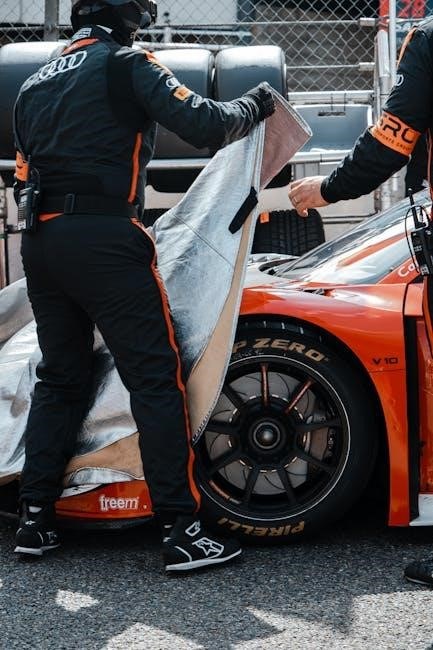
Furthermore, understanding tire degradation rates specific to each circuit is vital. Data analysis helps predict optimal stint lengths and informs pit stop windows. A Virtual Strategy Engineer (VSE) leverages this data, simulating race scenarios to refine strategy based on the unique demands of each track.
Weather Forecasting and its Influence
PDF documents highlight the critical role of accurate weather forecasting in race strategy. Rain significantly alters tire choices and pit stop timing, demanding adaptable plans. Predicting the onset and intensity of showers allows teams to proactively switch to intermediate or wet tires, gaining a competitive edge.

Furthermore, temperature fluctuations impact tire performance and fuel consumption. A Virtual Strategy Engineer (VSE) integrates weather data to simulate various scenarios, optimizing strategy for changing conditions; Teams must monitor forecasts continuously, adjusting plans in real-time to capitalize on opportunities or mitigate risks presented by unpredictable weather.
Qualifying Performance and Starting Grid Position
PDF analyses demonstrate a strong correlation between qualifying position and viable race strategy options. A higher grid position allows for a more conservative approach, focusing on track position and managing tire degradation. Conversely, starting further back often necessitates a more aggressive strategy, like an early undercut or overcut, to gain places.
The ability to “shadow” opponent strategies, as discussed in online forums, becomes crucial when starting mid-pack. A Virtual Strategy Engineer (VSE) can model the impact of different starting positions on potential race outcomes, informing pre-race planning and in-race adjustments.
In-Race Strategy Adjustments
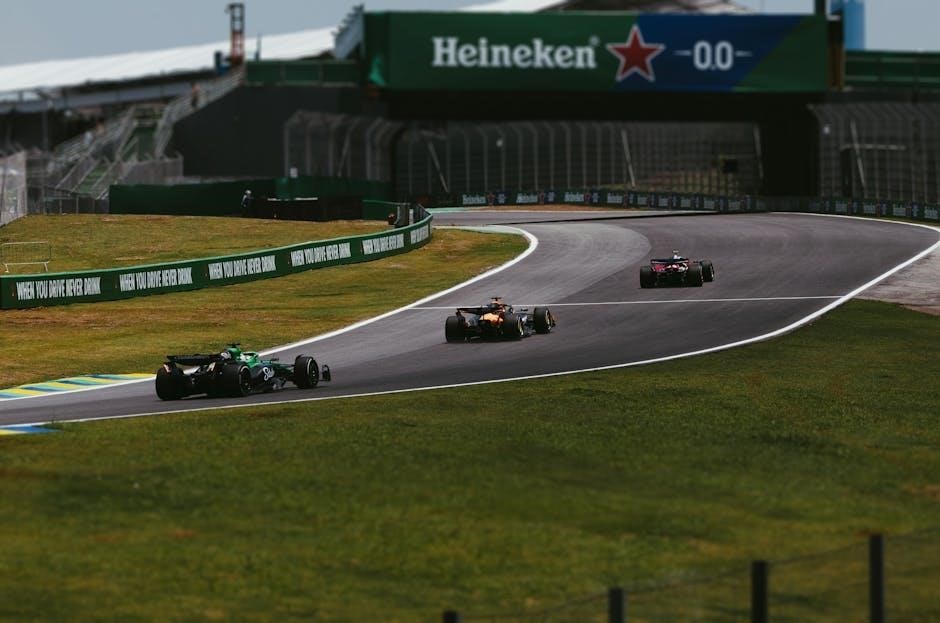
PDF research highlights the dynamic nature of race strategy, demanding constant adaptation. Unexpected events, like Safety Car periods, necessitate immediate recalculations; A Virtual Strategy Engineer (VSE) can rapidly assess the impact of these disruptions, suggesting optimal pit stop timings and tire choices.
Online discussions emphasize the importance of reacting to competitor actions. “Shadowing” their strategies, as suggested by Reddit users, provides valuable insights. Real-time data interpretation, a core function of the Race Engineer, is vital for making informed decisions and communicating effectively with the driver.
Responding to Safety Car Periods
PDF documentation on Virtual Strategy Engineers (VSE) emphasizes their role in swiftly evaluating the impact of Safety Car deployments. These systems recalculate optimal pit stop windows, considering reduced speeds and compressed race intervals. A key adjustment involves assessing whether to pit immediately under the Safety Car, potentially gaining track position.
The decision hinges on factors like pit lane entry/exit times and the gap to competitors. Online forums suggest that a well-timed pit stop during a Safety Car can be a significant strategic advantage, but requires precise execution and accurate predictions.
Pit Stop Timing and Execution
PDF analyses of Virtual Strategy Engineers (VSE) highlight their capability to predict optimal pit stop laps based on tire degradation models and competitor data; Precise timing is paramount; a delayed stop can lose valuable time, while an early one might necessitate another stop later.

Successful execution demands a coordinated team effort, minimizing downtime during wheel changes and refueling. Resources emphasize the importance of anticipating pit lane congestion and factoring it into the strategy. Online discussions suggest mastering the “undercut” and “overcut” relies heavily on flawless pit stop execution.
Driver Communication and Feedback
PDF documentation on Virtual Strategy Engineers (VSE) underscores the necessity of a clear communication loop between the engineer and driver. Drivers provide crucial real-time feedback on tire grip, car balance, and competitor positioning, influencing strategy adjustments.
Effective communication isn’t just relaying data; it’s understanding the driver’s feel and translating it into strategic decisions. Reddit discussions highlight shadowing opponents, requiring drivers to report closely on rivals’ pace. The driver must trust the engineer’s analysis, while the engineer values the driver’s on-track perception.
Advanced Race Strategy Techniques
PDF research details Advanced Race Strategy Techniques, notably the undercut and overcut, aiming to gain track position through pit stop timing. Utilizing Artificial Neural Networks (ANNs), a Virtual Strategy Engineer (VSE) can predict optimal moments for these maneuvers.
Shadowing opponent strategies, as discussed on Reddit, is another key technique, requiring constant monitoring and adaptation. Successful implementation relies on accurate data analysis and predictive modeling, mirroring the capabilities of a VSE. These techniques demand a deep understanding of tire degradation and fuel load impacts, optimizing for race victory.
Undercut and Overcut Strategies
PDF research highlights the undercut – pitting earlier to benefit from fresher tires while the opponent is still circulating on older compounds – and the overcut, delaying the pit stop to gain track position. A Virtual Strategy Engineer (VSE), powered by Artificial Neural Networks, analyzes data to predict the success of these maneuvers.

Successful execution depends on anticipating opponent behavior and understanding tire degradation rates. Reddit discussions emphasize the importance of timing; a well-executed undercut can leapfrog a driver up the order. Conversely, a failed attempt can leave them stuck behind slower cars.
Shadowing Opponent Strategies
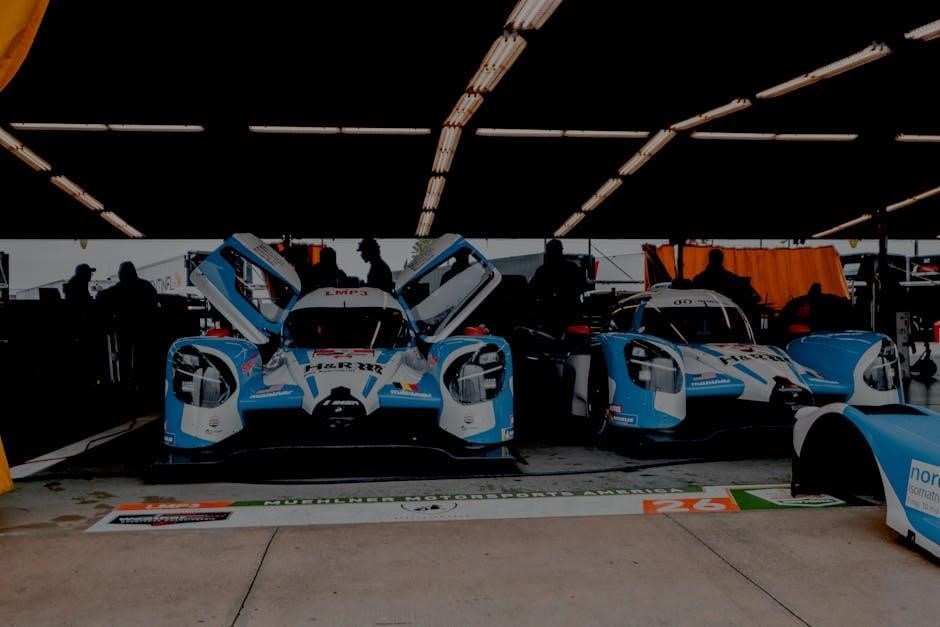
PDF analyses demonstrate that mirroring competitor actions – “shadowing” – is a foundational race strategy. This involves closely monitoring rivals’ pit stop timings and tire choices, then reacting accordingly. Reddit users advocate for constantly observing the cars immediately ahead and behind to decipher their plans.
However, simply copying isn’t always optimal. A Virtual Strategy Engineer (VSE) can refine this approach, factoring in unique car performance and predicted tire degradation. Successful shadowing requires adaptability; anticipating deviations from expected behavior is key to gaining a strategic advantage.
Utilizing Artificial Neural Networks for Strategy (VSE)
PDF research highlights the growing role of Virtual Strategy Engineers (VSE), powered by Artificial Neural Networks (ANNs), in modern motorsport. These systems analyze vast datasets – tire compounds, degradation rates, lap times – to predict optimal pit stop windows and tire selections.
A VSE doesn’t just react; it proactively suggests strategies, considering probabilities and potential scenarios. It’s particularly valuable during unpredictable events like Safety Car periods. By simulating numerous race outcomes, ANNs help teams minimize risk and maximize performance, offering a data-driven edge.

Race Strategy Across Different Motorsport Championships
PDF analyses reveal that race strategy varies significantly across motorsport disciplines. While all major series involving 90+ minute races necessitate pit stops, the nuances differ greatly. Formula 1 emphasizes tire management and undercut/overcut opportunities, demanding precise calculations.
Endurance racing, conversely, prioritizes fuel efficiency and reliability alongside pace. Strategy revolves around balancing performance with minimizing time spent in the pits. Different championships feature unique regulations and car characteristics, requiring adaptable strategic approaches. Understanding these distinctions is crucial for success.
Formula 1 Strategy Considerations
PDF research highlights that Formula 1 strategy centers on maximizing performance within strict tire regulations. A Virtual Strategy Engineer (VSE), powered by Artificial Neural Networks, aids in determining optimal pit stop timing and tire compound choices. The undercut and overcut are frequently employed tactics, dependent on track position and competitor pace.
Successful strategies require anticipating Safety Car periods and reacting swiftly. Fuel load management is also critical, balancing lap time with pit stop frequency. Data analysis and real-time simulations are essential tools for the race engineer, informing dynamic adjustments throughout the race.
Endurance Racing Strategy (90+ minute races)
PDF analyses reveal endurance racing strategy differs significantly from shorter formats, demanding a focus on consistency and minimizing risks over extended periods. Pit stop cycles are longer and more frequent, requiring precise fuel calculations and driver change coordination. Tire degradation management is paramount, balancing performance with durability.
Strategies often involve multiple drivers, necessitating careful consideration of pace differences and stint lengths. Safety Car interventions heavily influence race outcomes, demanding adaptable plans. Maintaining a consistent pace and avoiding mechanical failures are crucial for success in these 90+ minute events.
Comparing Strategy in Various Racing Series
PDF resources highlight substantial strategic variations across motorsport. Formula 1 prioritizes aggressive tire strategies and undercut/overcut maneuvers, while endurance racing emphasizes consistency and fuel efficiency. Touring car championships often feature strategic pit stops linked to mandatory driver changes and tire allocations.
Open-wheel series like IndyCar demand adaptability to changing track conditions and Safety Car periods. Each series presents unique challenges, influenced by regulations, car characteristics, and circuit layouts. Successful strategies require a deep understanding of these nuances, as summarized in comparative tables.
Tools and Technologies for Race Strategy
PDF documentation details the increasing reliance on sophisticated tools for race strategy. Race simulation software allows teams to model various scenarios and predict outcomes. Data acquisition systems provide real-time insights into car performance and tire degradation, feeding into strategic decisions.
Furthermore, Virtual Strategy Engineer (VSE) applications, powered by Artificial Neural Networks, are becoming essential. These systems analyze vast datasets to recommend optimal pit stop timing and tire choices. These technologies empower race engineers to make data-driven decisions, enhancing on-track performance and competitive advantage.
Race Simulation Software
PDF research highlights the pivotal role of race simulation software in modern motorsport strategy. These programs model complex variables – tire degradation, fuel consumption, and competitor pace – to predict race outcomes. Teams utilize simulations to evaluate different strategic options, like the undercut or overcut, before the race.
Sophisticated software allows for ‘what-if’ scenarios, accounting for potential Safety Car periods and varying weather conditions. By running thousands of simulations, teams can identify the most robust and advantageous strategy, minimizing risk and maximizing potential for success. This pre-race analysis is crucial for informed decision-making.
Data Acquisition and Analysis Systems
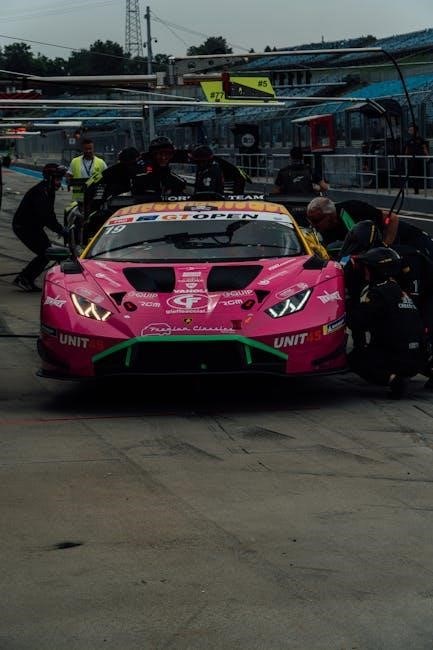
As detailed in PDF documentation, robust data acquisition systems are fundamental to effective race strategy. These systems collect a vast array of telemetry – tire pressures, brake temperatures, engine performance – in real-time during practice, qualifying, and the race itself. This data informs predictive models.
Advanced analysis tools then process this information, revealing trends in tire degradation and fuel consumption. Teams use this insight to refine their simulations and adjust strategies dynamically. Understanding how competitors are performing, gleaned from publicly available data, further enhances strategic decision-making, optimizing pit stop timing and compound choices.
Virtual Strategy Engineer (VSE) Applications
PDF research highlights the emergence of Virtual Strategy Engineers (VSE), powered by Artificial Neural Networks, as pivotal tools in modern motorsport. These applications analyze real-time data to predict optimal pit stop timings and tire compound selections, mirroring the role of a human race engineer.
A VSE considers numerous variables – lap times, tire degradation, fuel levels, and competitor strategies – to propose the most advantageous course of action. They can rapidly evaluate multiple scenarios, accounting for potential Safety Car periods. This technology allows teams to react swiftly and decisively, maximizing their chances of success during a race.
The Role of the Race Engineer
The race engineer serves as the central hub for race strategy execution, interpreting a constant stream of data to inform critical decisions. While Virtual Strategy Engineer (VSE) applications, detailed in PDF research, provide valuable predictions, the engineer’s expertise remains paramount.
They must synthesize VSE outputs with driver feedback, track conditions, and competitor actions. Effective communication with the driver is crucial, conveying strategic adjustments clearly and concisely. The engineer’s ability to adapt to unforeseen circumstances – like Safety Car deployments – and make split-second calls defines a successful race outcome.
Real-time Data Interpretation
Analyzing incoming data is fundamental; a PDF on Virtual Strategy Engineers (VSE) highlights the importance of processing information regarding tire degradation, fuel consumption, and competitor pace. The race engineer must swiftly discern trends and anomalies, comparing actual performance against pre-race simulations.
This involves monitoring lap times, sector splits, and telemetry data to assess the effectiveness of the current race strategy. Real-time interpretation allows for proactive adjustments, such as optimizing pit stop timing or modifying driver driving style, maximizing performance and responding to dynamic track conditions.
Strategic Decision-Making
Based on real-time data, the race engineer employs strategic foresight, as detailed in PDF research on Virtual Strategy Engineers (VSE). This includes deciding when to initiate pit stops, selecting optimal tire compounds, and anticipating competitor moves – like employing an undercut or overcut strategy.
Effective decision-making balances risk and reward, considering factors like safety car probabilities and potential track position gains. A race strategy isn’t static; it requires constant evaluation and adaptation, informed by predictive modeling and a deep understanding of the race dynamics.
Communication with the Driver
Clear and concise communication, as highlighted in resources detailing race strategy, is paramount. The engineer relays crucial information – tire degradation rates, competitor strategies (shadowing), and potential safety car scenarios – to the driver, enabling informed decisions on track.
Driver feedback is equally vital; they provide insights into car handling and tire performance. This two-way dialogue, often informed by PDF-documented VSE systems, allows for dynamic strategy adjustments. Effective communication minimizes errors and maximizes the potential for optimal race execution, ensuring alignment between planned strategy and on-track reality.